
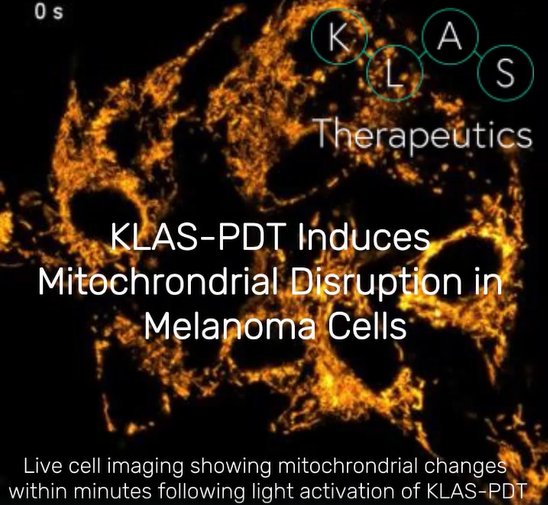
New imaging has captured our KLAS-PDT technology targeting melanoma cells, offering valuable insight into how the therapy works. Within minutes of activation, we observed disruption of the mitochondria, the cell’s energy-producing organelles, helping to reveal the mechanism of action behind this therapeutic approach.
These findings mark an important step forward in our understanding of how KLAS-PDT affects cancer cells and support its continued development as a potential treatment for melanoma. Building a detailed picture of the biological effects of KLAS-PDT is critical as we advance towards future stages of development.
This work was made possible through the collaboration and expertise of the team at Medicines Discovery Catapult, whose support has been instrumental in deepening our understanding of the cellular mechanisms involved following treatment.
We would also like to acknowledge the support of Innovate UK through grant #10150595, and the team at Innovation Ulster Limited. Their support has enabled the generation of critical scientific data and helped accelerate our ongoing research programme.
Scientific progress is built on collaboration, innovation and a shared commitment to improving outcomes for patients. We look forward to sharing further progress in the months ahead.